
Looking for support?
Start by searching the medical directory for trusted Behavioral & Mental Health providers in your area.
You Don’t Have to Tough It Out: How Behavioral and Mental Health Providers Can Be Your Lifeline
Let’s Be Real: Life Is a Lot
There’s this idea out there—maybe from the movies, maybe from that one stoic relative—that we’re all supposed to just power through. Bad day? Smile anyway.
Deep sadness? Push it down.
Struggling with addiction? Don’t talk about it, just “fix” it.
Let me say this clearly: that’s nonsense.
Life can be wonderful, sure.
But it’s also messy, confusing, unpredictable, and sometimes downright cruel.
And when things go sideways-when anxiety sneaks in, when depression takes hold, when substance use becomes a means of escape rather than a weekend habit-you need more than a self-help podcast or a bath bomb.
You need support.
Real, professional, compassionate support.
That’s where behavioral and mental health providers come in.
What Are Behavioral and Mental Health Providers, Anyway?
It’s more than just therapists with comfy couches.
Behavioral and mental health providers are trained professionals who help people manage emotional struggles, cope with trauma, and recover from mental health conditions or substance use disorders.
They can include:
- Psychiatrists – Medical doctors who can diagnose mental health disorders and prescribe medication.
- Psychologists – Experts in human behavior who offer talk therapy, psychological testing, and coping strategies.
- Licensed Clinical Social Workers (LCSWs) – Providers who combine therapeutic approaches with social advocacy.
- Licensed Professional Counselors (LPCs) – Mental health professionals trained in helping individuals, couples, and families through emotional challenges.
- Substance Use Counselors – Specialists who focus on addiction recovery and relapse prevention.
They work in hospitals, clinics, private practices, schools, community centers-and increasingly, online.
Why People Seek Mental and Behavioral Health Support
You don’t need to have a formal diagnosis to benefit from professional help.
You just need to be human.
Here are some common reasons people reach out:
1. Anxiety That’s Running the Show
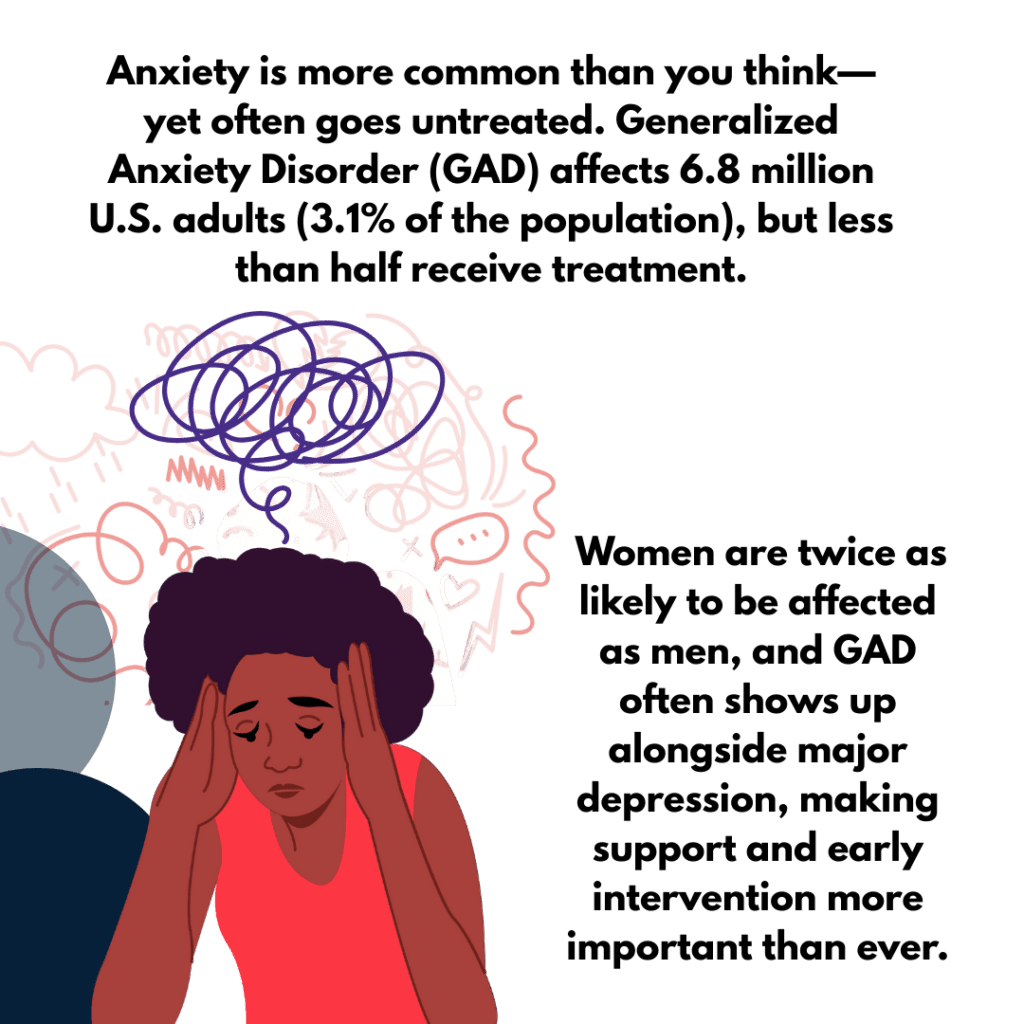
If your brain feels like it’s in a never-ending group chat of worst-case scenarios, you’re not alone.
Generalized anxiety disorder affects around 6.8 million adults in the U.S., according to the Anxiety & Depression Association of America.
2. Depression That’s Not Just “Sadness”
It’s not just feeling down. Depression can steal your energy, appetite, motivation, and interest in life.
A provider can help you unpack the root causes and work toward healing.
3. Burnout (Because the Hustle Culture is a Lie)
Especially for working moms, caretakers, or anyone juggling 37 different hats at once, burnout isn’t a buzzword-it’s a crisis.
Providers can help you set boundaries, reprioritize, and recharge.
4. Grief That Won’t Go Away
Grief isn’t linear.
Whether it’s from a death, a divorce, or even a lost dream, having a mental health provider to walk beside you can make the journey less isolating.
5. Substance Use That’s Escalated
This is a big one.
Substance use disorders don’t look like the after-school specials of the 90s.
They can sneak up subtly, especially when substances are used to self-soothe.
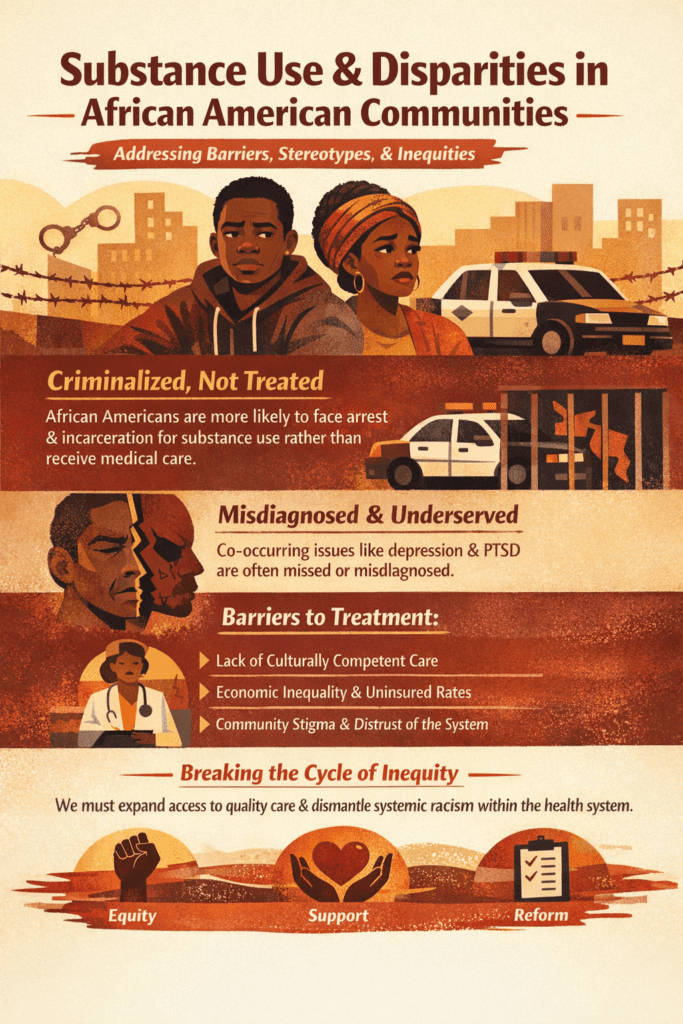
Substance use, especially in African American communities, is deeply impacted by systemic disparities that go far beyond personal choice or behavior.
While rates of substance use are comparable to or even lower than those in white populations, African Americans are more likely to experience criminalization rather than medical intervention when struggling with addiction.
This is fueled by long-standing racial stereotyping that frames substance use in Black individuals as a moral failing rather than a mental health concern.
As a result, African Americans are often underdiagnosed or misdiagnosed, especially when it comes to co-occurring disorders like depression or PTSD, which are commonly linked to substance use.
Accessing quality treatment is also a major hurdle-barriers like lack of culturally competent care, socioeconomic inequities, stigma within the community, and limited insurance coverage all play a role.
Even when treatment is available, many African Americans are less likely to receive evidence-based therapies and more likely to encounter distrust or bias within healthcare settings.
Addressing these disparities requires not only increasing access to care but also dismantling the systemic racism embedded in the behavioral health system itself.
Recovery is not about shame-it’s about getting the right help.
6. You’re Just Not Feeling Like Yourself
Sometimes, you can’t put your finger on what’s wrong-you just know something is off.
That’s reason enough to talk to someone.
What Does Support Actually Look Like?
Behavioral and mental health support is not one-size-fits-all.
That’s the beauty of it-your provider will work with you to figure out what you need, not what your aunt’s friend’s cousin needed.
Here are some common tools and approaches:
🧠 Talk Therapy (aka “I Need to Vent Without Being Judged”)
Whether it’s CBT (Cognitive Behavioral Therapy), DBT (Dialectical Behavior Therapy), or just a good ol’ fashioned heart-to-heart, talk therapy provides a safe space to process emotions, break negative thought patterns, and learn healthy coping skills.
💊 Medication Management
Sometimes, your brain chemistry needs a little boost.
Psychiatrists and nurse practitioners can assess whether medication might help-and they’ll work closely with you to monitor its effectiveness.
🤝 Group Therapy or Support Groups
There’s something powerful about hearing “me too.”
Group sessions foster connection and reduce shame-especially for those recovering from substance use.
🏠 Case Management & Holistic Support
Social workers and case managers can help you navigate insurance, housing, job support, and more-because mental health doesn’t exist in a vacuum.
💻 Teletherapy (Mental Health in Pajamas!)
Thanks to online platforms, you can now meet with licensed professionals from your couch.
Teletherapy has made mental health support more accessible than ever.
Myths That Need to Die Yesterday
Let’s bust a few myths that might be stopping you (or someone you love) from reaching out:
🚫 “Therapy is for people who are weak.”
Reality: Therapy is for people who are strong enough to ask for help when they need it.
🚫 “I don’t have time.”
Reality: You’re already spending 45 minutes doom-scrolling. You can carve out one hour for yourself.
🚫 “Only people with severe issues go to therapy.”
Reality: Everyone deserves support. Whether it’s stress from work or a full-blown crisis, help is available.
🚫 “If I go once, I’ll have to go forever.”
Reality: You and your provider set your goals. Some people need a few sessions, others benefit from long-term support. There’s no one right path.
Substance Use Recovery: More Than Detox
Substance use is a mental health issue. Period. And recovery doesn’t stop when the physical withdrawal ends. That’s just the beginning.
Behavioral and mental health providers are critical in:
- Identifying triggers that lead to use
- Building relapse prevention strategies
- Addressing co-occurring disorders like PTSD or depression
- Supporting family healing
- Helping people rebuild meaning and purpose in their lives
Recovery is not about perfection-it’s about progress.
And providers walk with you, not ahead of you.
How to Find the Right Provider for You
Finding the right match is a bit like dating-you may not click with the first person, and that’s okay.
Here’s how to start:
- Check with your insurance provider – See which providers are in-network.
- Use online directories like Psychology Today or SAMHSA’s Treatment Locator.
- Ask for referrals from your primary care doctor or trusted friends.
- Try virtual options like BetterHelp or Talkspace if access is limited.
- Look for specializations – whether it’s trauma, LGBTQ+ support, substance use, or grief, find someone trained to support your specific needs.
💡 Pro Tip: Many providers offer a free 15-minute consult call so you can get a feel for their style before committing.
Red Flags to Avoid
While most providers are incredible, it’s worth knowing what to steer clear of:
- They interrupt or invalidate your experiences
- They push medication without exploring therapy
- They don’t respect your boundaries or autonomy
- You just don’t feel safe or heard
If that’s the case, don’t give up-just keep looking.
The right fit is out there.
Why This Matters Now More Than Ever
Mental health challenges are more common than ever-and no wonder.
Between global uncertainty, economic stress, climate anxiety, and just the general pace of modern life, everyone is struggling in some way.
According to the National Alliance on Mental Illness (NAMI), 1 in 5 U.S. adults experiences mental illness each year.
That’s 20% of your neighbors, coworkers, friends-even the people who look like they have it all together on Instagram.
You are not broken. You are not alone.
And you deserve support.
Take the First Step-Even If It’s a Small One
So let’s be honest: You wouldn’t try to fix a broken leg by meditating.
You wouldn’t try to cure strep throat with a vision board.
Mental health is health.
And it’s time we started treating it that way.
Whether it’s finding a therapist, talking to your doctor, or even just telling a friend, your next step doesn’t have to be huge.
It just has to be forward.
How Are You Doing?
Are you considering reaching out for mental health support?
If you’re sitting on the fence, here’s your sign: Make that call.
You deserve it.
Key Takeaways
- Behavioral and mental health providers help people cope with emotional challenges, mental illness, and substance use recovery.
- Support comes in many forms: talk therapy, medication, support groups, holistic care, and more.
- You don’t need a diagnosis to get help. Feeling off is enough.
- Recovery-mental or physical-is a process, not a destination.
- There is zero shame in asking for help. In fact, it’s one of the bravest things you can do.
Remember this:
You don’t have to tough it out.
You don’t have to carry everything alone.
Help is here-and it can make all the difference.